

Engineering of Mooring System
Our engineering team provides end-to-end design and analysis of offshore mooring systems to ensure safe, reliable, and cost-effective station-keeping systems for floating structures. We integrate hydrodynamics, floater dynamics, and marine geotechnics to deliver mooring solutions that meet international standards and project-specific requirements.

Interpretation of Soil Data
- We analyze geophysical and geotechnical survey data, including (but not limited to):

Cone Penetration Test (CPT)

Borehole logs

Laboratory test results

Seabed stratigraphy
- Our experts generate soil models and identify potential issues such as layered soils, gas pockets, or boulders that may affect mooring performance
- Soil data is augmented with data from our database when available
Subsea Foundation Selection
We assess multiple technical and logistical parameters before recommending the anchor type and configuration. Key criteria include:
(for temporary moorings)
To ensure a technically sound and certifiable anchor recommendation, we work closely with our clients to gather all essential data and provide clear, actionable deliverables. Here’s how we collaborate with you throughout the anchor selection process:
GEOTECHNICAL DATA
A reliable anchor selection study begins with a clear understanding of the seabed. We’ll ask you to provide (if available):
Geophysical investigation reports
- Geotechnical investigation reports
- Desktop studies
This data allows our team to model seabed strength, layering, and any subsurface challenges—laying the foundation for a successful mooring system.

To accurately assess anchor capacity, we need your design environmental conditions, including:
- Wind, wave, and current statistics from your metocean report
- Design storm criteria and any extreme condition scenarios
- Project-specific load cases and return periods
The more we know about your site’s conditions, the more precise and optimized your anchor selection will be.
MOORING SYSTEM

Tell us about your mooring configuration:
- What’s the tension range on your mooring lines during normal and storm conditions?
- What are your preferred line types—chain, wire, or synthetic rope?
- Do you require a temporary, semi-permanent, or permanent mooring?
We use this information to determine the required holding capacity and load direction for each anchor—key factors in anchor geometry and embedment depth.
Consider Logistics: Let’s Factor in Installation and Vessel Access
Anchor selection isn’t just a technical decision—it’s also about what can be installed safely and efficiently. Please share your:
- Marine spread availability (AHTS vessel specs, ROV capability)
- Deck space or lifting limitations
- Project timeline and any offshore campaign windows
With these insights, we ensure the selected anchor is not only the right one for the soil—but also deployable with the assets you have on hand.
What You Can Expect from Us
- A clear Anchor Selection Matrix that compares anchor types based on soil compatibility and capacity
- Analytical calculations showing holding capacity and load–displacement behaviour, based on your design loads
- Preliminary anchor sizing, embedment depth, and installation angle recommendations
- Seabed suitability maps identifying optimal anchor locations across your field
- A formal Anchor Selection Report, fully compliant with Classification Society rules, API RP 2SK, ISO 19901-7, and / or any client-specific codes
And if needed, a concise presentation deck to support internal reviews or third-party certification
Embedment Prediction and Load-Displacement Analysis
Accurate prediction of how an anchor behaves during penetration and loading is critical to ensure holding capacity and system reliability.
We perform:
- Penetration depth modelling using empirical and analytical approaches
- Load–displacement curve generation to understand the anchor’s response under loading
- Estimation of ultimate holding capacity and factor of safety against pullout
- Simulation of soil resistance mobilization over time
- Effect of cyclic loading on the anchor – soil interaction
These analyses are essential to ensure the long-term reliability of the anchoring system for permanent floating oil & gas and renewable stationkeeping systems.
Finite Element Analysis (FEA) for Structural Integrity
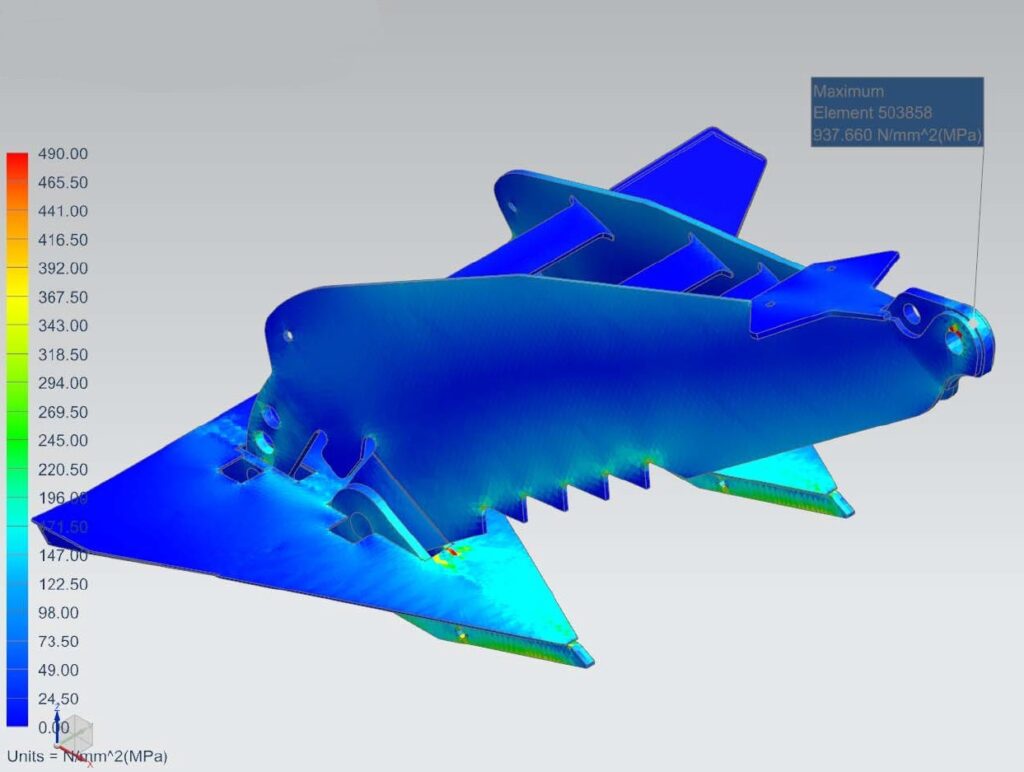
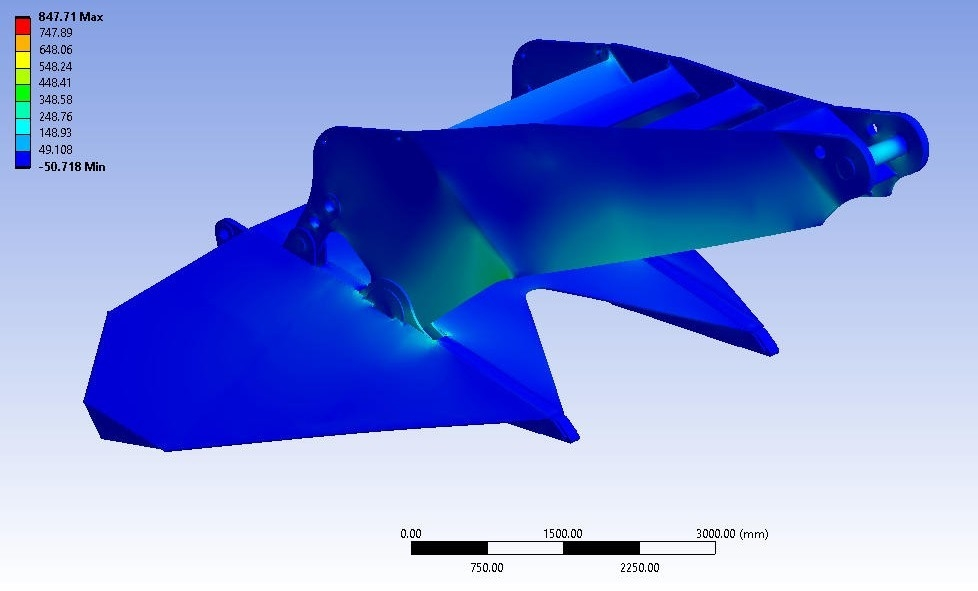
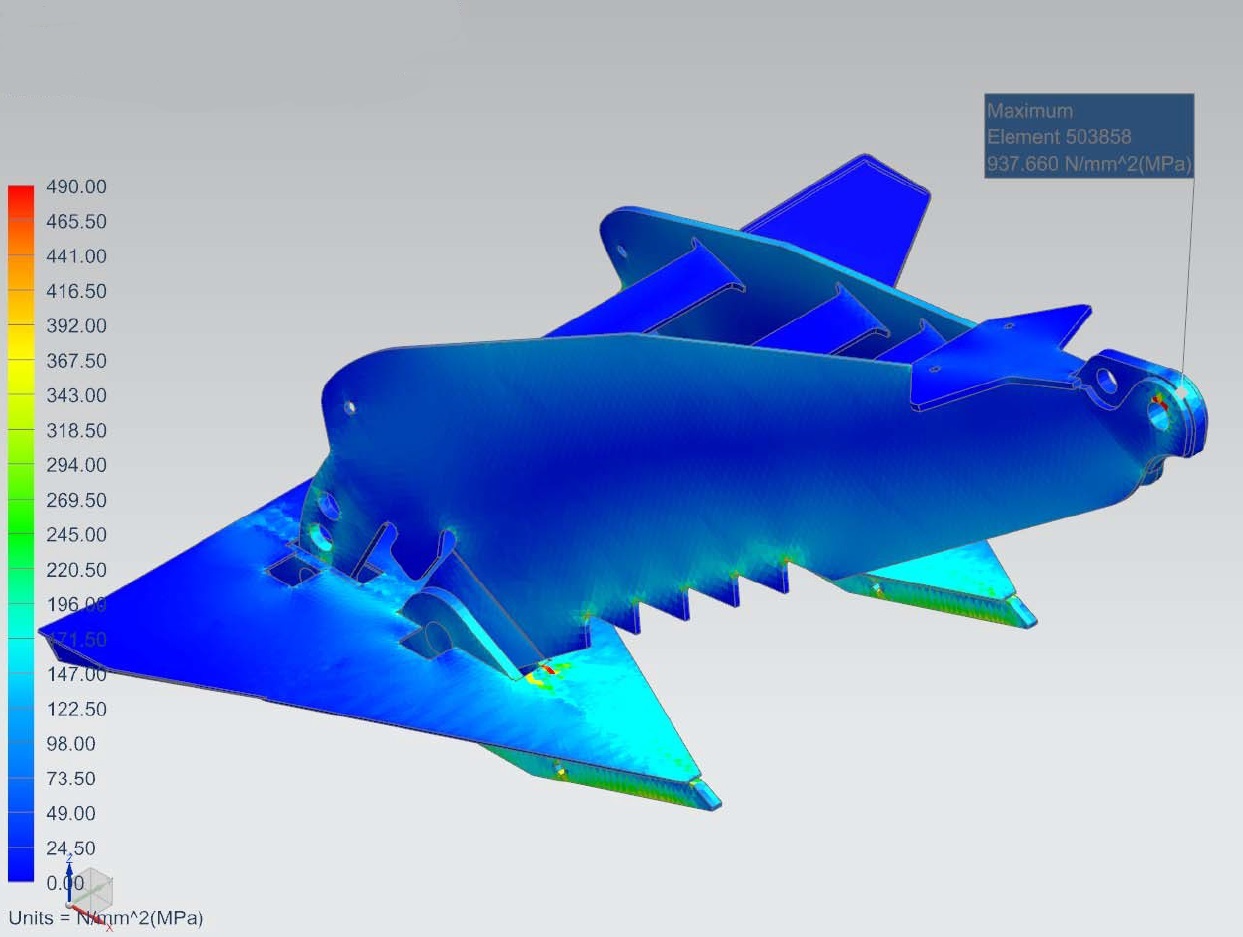
We use 3D finite element models to simulate complex anchor behavior that cannot be fully captured through analytical tools.
Our FEA capabilities include:
- Nonlinear soil behaviour (strain-softening, hardening, or layered soil)
- Large-deformation analysis for drag anchors
- Contact friction modeling between anchor flukes/skirt and soil
- Dynamic loading for short- and long-term cyclic effects (storm survival, fatigue)
- Assessment of soil plug resistance, skirt tip penetration, and gapping effects
FEA helps reduce over-conservatism in anchor sizing and supports the use of cost-effective solutions by verifying performance under realistic seabed and loading scenarios.
Permanent Mooring Design
Anchors for use in permanent mooring systems must be designed and supplied in accordance with classification society rules. These rules specify requirements for the geotechnical and structural capacity of the anchors, the materials used, and the inspection and tests to be performed during fabrication. An important deliverable, alongside the anchors themselves, is the anchor certificate referencing the design approval certificates. The design approval certificate confirms that the anchor design has been reviewed and found suitable for use in the specific permanent mooring system.
Design Standards and Project-Specific Codes
Our anchor designs are fully aligned with globally recognized offshore geotechnical standards, ensuring compatibility with certifying bodies such as (ABS, DNV, BUREAU VERITAS, KR, Lloyd’s Register, ClassNK, RINA) and operator expectations.
Key compliance elements include:
- Loads for ULS, SLS, and ALS conditions
- Seabed variability assessment and design envelope criteria
- Documentation ready for third-party verification, Classification Society approval, and operational handover
Proposal of Subsea Foundation
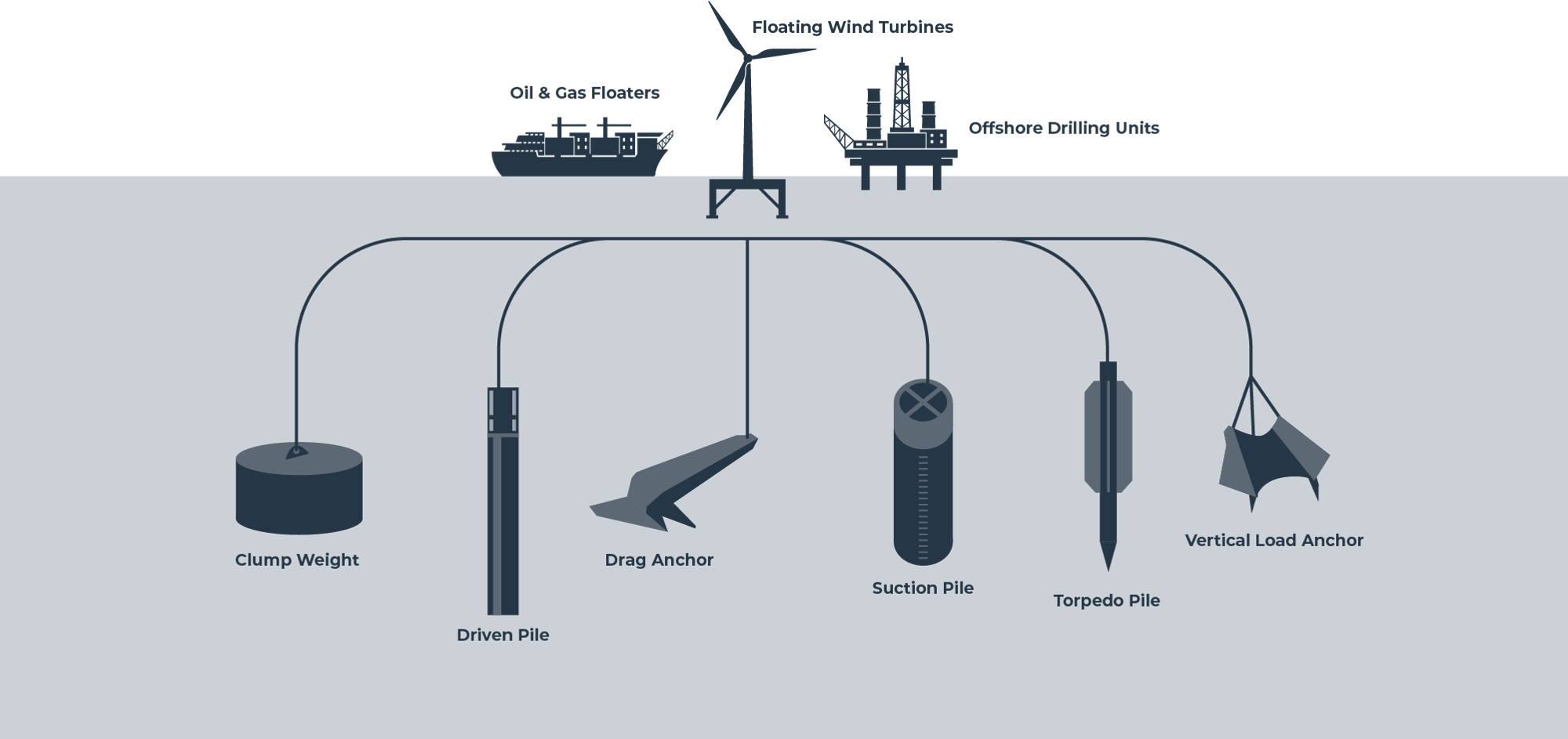
Based on the project conditions and needs, Mooreast can design and supply a range of foundation options such as Drag embedment anchors, Driven piles, Suction piles, Gravity anchors and dynamically installed anchors
Mooring System Design
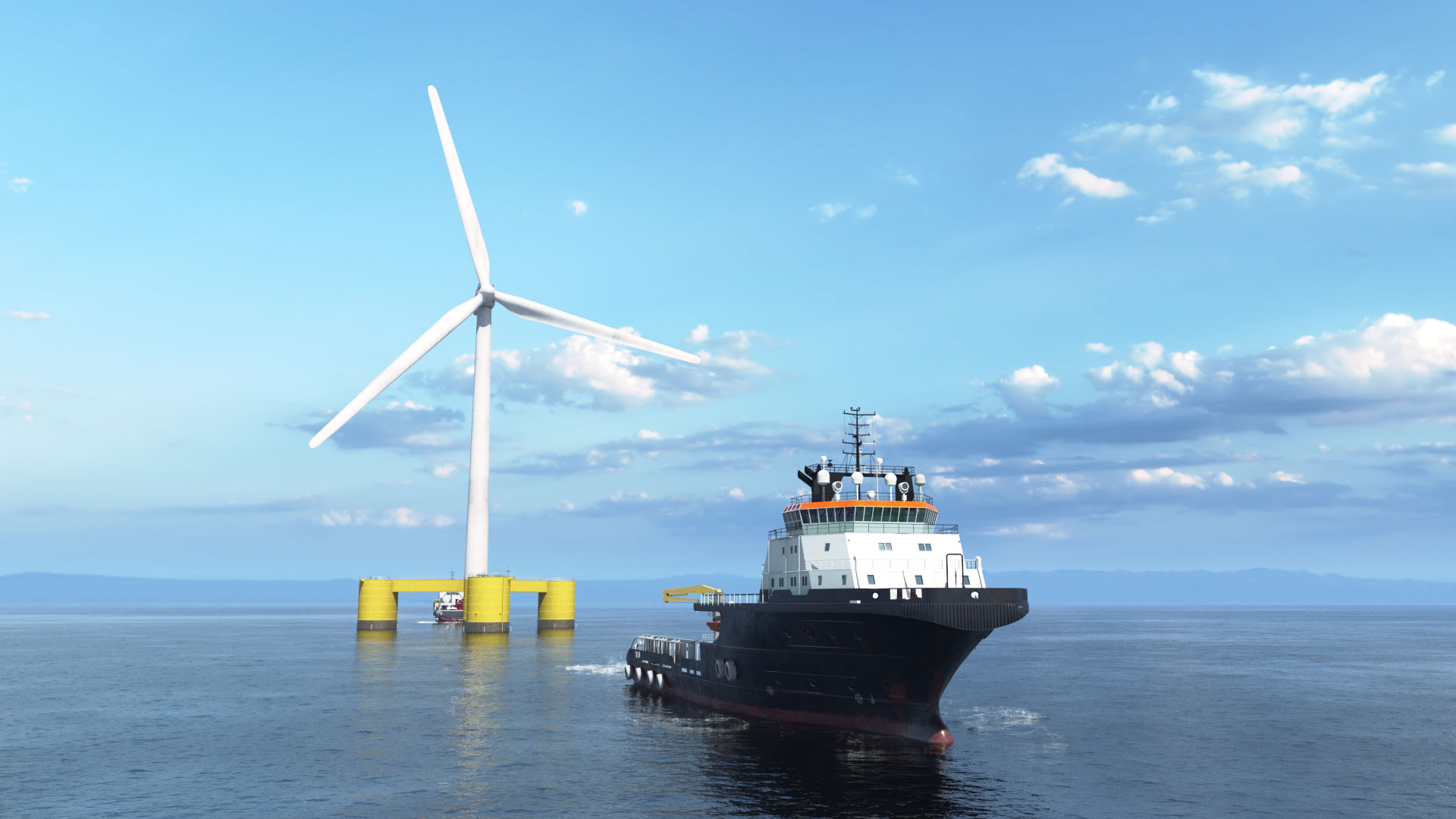
At Mooreast we specialize in the engineering and design of mooring systems for a wide range of floating systems from FPSOs, FSOs, semi-submersibles, SPARs and Barge-shaped floaters, to Floating Wind Turbines (FOWTs) and marine offloading buoys.
Whether the project is operating in relatively shallow waters with chain catenary systems or in deepwater with synthetic rope taut leg moorings, our experts deliver mooring solutions that are fit-for-purpose, safe, and optimized for performance and cost. Our competence also includes design of single point mooring systems starting from concept development, detailed calculations, design reports and specifications.
Dynamic Simulations
Floating structures and their mooring and riser systems or dynamic cables often operate in some of the world’s harshest environments. Predicting how they behave under waves, wind, and current is critical for the safe and cost-effective design of offshore systems.
At Mooreast, we offer advanced dynamic simulations to model and assess the motion response, mooring loads, and fatigue performance for all types of floating offshore units, including:
FPSOs (Floating Production Storage and Offloading)
Semi-submersibles
SPARs and Barge-shaped floaters
Floating Offshore Wind Turbines (FOWTs)
What We Offer
We provide end-to-end mooring system line design services that integrate seamlessly with your project needs, regardless of stage or complexity:
Concept Selection & Feasibility Studies
Determine the best mooring system for the floater based on site-specific conditions, design life and excursion limits set by the operators
Evaluate suitability of catenary, taut, and semi-taut system
Evaluate choice of mooring line segment such as chain, wire rope and synthetic based on cost, strength, fatigue life, and handling
Detailed Engineering & Analysis
Perform static, quasi-dynamic, dynamic analyses and fatigue analysis of mooring system.
Optimize mooring layout orientation, pre-tension and line lengths to minimize vessel motions and mooring loads
Design for safety compliance using project-specific metocean data
Offloading analysis to assess the operational limits and downtime assessment for offloading
Component Selection & Layout Optimization
Specify type, grade, diameter and length of mooring line segments and components.
Position fairleads, buoys, and clump weights to achieve optimised line profiles
Ensure compatibility with anchor types, turret systems, and subsea infrastructure
Class of Regulatory Compliance
Design in accordance with Classification Society rules and other internationally accepted codes such as API RP 2SK
Provide detailed documentation for Classification Society approval
Support third-party design verification and technical audits
Where We Add Value
What sets us apart is our ability to design with the full project lifecycle in mind — from pre-FEED through installation and to decommissioning. We don’t just look at mooring as a structural challenge — we look at it holistically to optimize your project in terms of:
Installation efficiency
Long-term durability
Lifecycle cost savings
Operational flexibility
We also ensure that the design aligns with installation vessel capability, hookup loads, and line pre-tensioning — factors often overlooked but crucial in the real-world for a successful installation.
Site Layout Optimization
As floating offshore wind projects scale up, site layout optimization becomes one of the most important—and most complex—aspects of project success. With dozens or even hundreds of floating turbines spread across large lease areas, it’s not just about where turbines are placed. It’s about how the entire mooring system integrates with your site, infrastructure, and marine operations.
At Mooreast, we provide specialized site layout engineering that help developers design smarter, safer, and more cost-effective floating wind farm layouts.
Why Site Layout Optimization Matters
In floating wind, every decision about layout affects the bottom line. A well-optimized site can:
- Maximize energy production by reducing wake effects
- Minimize anchor count and seabed disturbance
- Optimizing array cable lengths
- Simplify offshore installation and maintenance
- Reduce project risk from excessive motion or line clash
As the number of turbines grows, so do the challenges — including mooring line interference, anchor footprint congestion, and cable routing complexity. That’s where mooring engineering plays a critical role.
How Mooring Engineering Supports Layout Optimization
Our team brings deep experience in mooring system design and marine operations to help developers align turbine placement, mooring configuration, and infrastructure planning. Here’s how we support optimized layout design:
Every floating wind site is different. Based on water depth, seabed conditions, and environmental forces, we help select the best-suited mooring architecture:
- Catenary systems for shallow-to-mid depths
- Taut or semi-taut systems for deep water and reduced footprint
- Hybrid systems for optimized performance and cost
We model each option to compare footprint, cost, load paths, and installation time — helping you make informed decisions early in the project.
In large wind arrays, mooring lines can easily overlap, creating risks during installation or operation. We use advanced simulation tools to:
- Calculate safe turbine spacing
- Design repeatable mooring patterns
- Assess potential line clashes or entanglements
- Explore shared anchor systems to reduce complexity
By minimizing anchor counts and line interactions, you save time and reduce cost — without compromising safety.
Floating turbines move. We design your mooring system to manage those movements within limits that protect the dynamic power cables and maintain inter-turbine spacing. Our engineers analyze:
- Turbine offset ranges under normal and extreme weather
- Motion envelopes to avoid cable overstress or fatigue
- Cable entry points to prevent clashes with mooring lines
The result? A coordinated design that keeps both mooring and power systems working together.
A layout that looks good on paper may not be practical offshore. We consider real-world factors like:
- Installation vessel capabilities
- Anchor setting methods
- Tow-out paths for floating turbines
- Pre-lay strategies
This allows us to propose layouts that are not only technically sound but also safe, installable, and certifier-compliant.
By optimizing line length, spacing, and anchor selection, we reduce the total seabed area disturbed by anchors and chains. We also evaluate:
- Seabed interaction areas
- Opportunities for anchor sharing
- Layouts that align with regulatory constraints and environmental windows
This is critical for gaining approval and maintaining your project’s long-term sustainability goals.
Mooring System
(for temporary moorings)
GEOTECHNICAL DATA
- Cone Penetration Test (CPT) logs, borehole data, and any laboratory soil test results.
- Detailed soil stratigraphy profiles, in both PDF and editable Excel format.
- High-resolution bathymetric maps and geophysical survey reports.
- Wind, wave, and current statistics from your metocean report
- Design storm criteria and any extreme condition scenarios
- Project-specific load cases and return periods
MOORING SYSTEM
- What's the tension range on your mooring lines during normal and storm conditions?
- What are your preferred line types—chain, wire, or synthetic rope?
- Do you require a temporary, semi-permanent, or permanent mooring?
- Marine spread availability (AHTS vessel specs, ROV capability)
- Deck space or lifting limitations
- Project timeline and any offshore campaign windows
- A clear Anchor Selection Matrix that compares anchor types based on soil compatibility and capacity
- Analytical calculations showing holding capacity and load–displacement behaviour, based on your design loads
- Preliminary anchor sizing, embedment depth, and installation angle recommendations
- Seabed suitability maps identifying optimal anchor locations across your field
- A formal Anchor Selection Report, fully compliant with Classification Society rules, API RP 2SK, ISO 19901-7, and / or any client-specific codes
- Penetration depth modelling using empirical and analytical approaches
- Load–displacement curve generation to understand the anchor's response under loading
- Estimation of ultimate holding capacity and factor of safety against pullout
- Simulation of soil resistance mobilization over time
- Effect of cyclic loading on the anchor – soil interaction
- Nonlinear soil behaviour (strain-softening, hardening, or layered soil)
- Large-deformation analysis for drag anchors
- Contact friction modeling between anchor flukes/skirt and soil
- Dynamic loading for short- and long-term cyclic effects (storm survival, fatigue)
- Assessment of soil plug resistance, skirt tip penetration, and gapping effects
Anchors for use in permanent mooring systems must be designed and supplied in accordance with classification society rules. These rules specify requirements for the geotechnical and structural capacity of the anchors, the materials used, and the inspection and tests to be performed during fabrication. An important deliverable, alongside the anchors themselves, is the anchor certificate referencing the design approval certificates. The design approval certificate confirms that the anchor design has been reviewed and found suitable for use in the specific permanent mooring system.
- Loads for ULS, SLS, and ALS conditions
- Seabed variability assessment and design envelope criteria
- Documentation ready for third-party verification, Classification Society approval, and operational handover
- FPSOs (Floating Production Storage and Offloading)
- Semi-submersibles
- SPARs and Barge-shaped floaters
- Floating Offshore Wind Turbines (FOWTs)
- Determine the best mooring system for the floater based on site-specific conditions, design life and excursion limits set by the operators
- Evaluate suitability of catenary, taut, and semi-taut system
- Evaluate choice of mooring line segment such as chain, wire rope and synthetic based on cost, strength, fatigue life, and handling
- Perform static, quasi-dynamic, dynamic analyses and fatigue analysis of mooring system.
- Optimize mooring layout orientation, pre-tension and line lengths to minimize vessel motions and mooring loads
- Design for safety compliance using project-specific metocean data
- Offloading analysis to assess the operational limits and downtime assessment for offloading
- Specify type, grade, diameter and length of mooring line segments and components.
- Position fairleads, buoys, and clump weights to achieve optimised line profiles.
- Ensure compatibility with anchor types, turret systems, and subsea infrastructure
- Design in accordance with Classification Society rules and other internationally accepted codes such as API RP 2SK
- Provide detailed documentation for Classification Society approval
- Support third-party design verification and technical audits
- Installation efficiency
- Long-term durability
- Lifecycle cost savings
- Operational flexibility
- FPSOs (Floating Production Storage and Offloading)
- Semi-submersibles
- SPARs and Barge-shaped floaters
- Floating Offshore Wind Turbines (FOWTs)
- Maximize energy production by reducing wake effects
- Minimize anchor count and seabed disturbance
- Optimizing array cable lengths
- Simplify offshore installation and maintenance
- Reduce project risk from excessive motion or line clash
- Catenary systems for shallow-to-mid depths
- Taut or semi-taut systems for deep water and reduced footprint
- Hybrid systems for optimized performance and cost
- Calculate safe turbine spacing
- Design repeatable mooring patterns
- Assess potential line clashes or entanglements
- Explore shared anchor systems to reduce complexity
- Turbine offset ranges under normal and extreme weather
- Motion envelopes to avoid cable overstress or fatigue
- Cable entry points to prevent clashes with mooring lines
- Installation vessel capabilities
- Anchor setting methods
- Tow-out paths for floating turbines
- Pre-lay strategies
- Seabed interaction areas
- Opportunities for anchor sharing
- Layouts that align with regulatory constraints and environmental windows